

Successfully helping seniors transition to assisted living involves personalizing their new living space with familiar items and encouraging participation in social activities to foster a sense of community. Families should establish a balanced visitation schedule that allows for adjustment; meanwhile, seeking professional support or counseling can help manage the emotional toll of the move.
Watching a loved one struggle with the loss of independence is one of the most taxing experiences a family can endure. The decision to move a parent into assisted living often brings a heavy burden of guilt, anxiety, and uncertainty for everyone involved. At Senior Care Placement Advisors, LLC, we understand that this transition is rarely about just finding a new address; it is about preserving dignity and quality of life during a period of profound change. This guide provides a professional framework for navigating the emotional complexities of the relocation process. You will learn practical strategies for building trust during the pre-move phase, methods for establishing routines within the first thirty days, and specific tips for social integration within Cleveland communities. By focusing on both the logistics and the emotional journey, you can help your loved one find peace and purpose in their new home.
Understanding the Emotional Weight of the Move
Moving from a long-term home in Greater Cleveland to a senior living community represents one of the most significant life milestones a family will face. It is rarely just a matter of logistics; it is a profound emotional transition. For many seniors, leaving a residence where they raised children or hosted decades of holiday dinners triggers a deep sense of grief that goes beyond simple nostalgia. This move involves a loss of autonomy and a departure from a familiar sanctuary, which can lead to a clinical phenomenon known as Relocation Stress Syndrome (RSS).
RSS, also referred to as transfer trauma, is characterized by symptoms such as acute anxiety, confusion, loneliness, and even physical exhaustion. While many resources focus solely on the excitement of new amenities, it is vital to acknowledge the underlying sorrow. This grief is valid and often shared; adult children frequently experience a parallel sense of loss and guilt as they navigate the complexities of helping seniors transition to assisted living. Recognizing that these feelings are a natural part of the process is the first step toward a healthy adjustment.
Understanding the psychological impact is as important as finding the right floor plan. Families often benefit from senior living resources that prioritize emotional well-being alongside physical care. By addressing the grief behind a loved one’s resistance or sadness, you can move toward a solution that respects their history while ensuring their future safety. If the emotional weight of this decision feels overwhelming, seeking professional senior care placement services can provide the objective, compassionate guidance needed to navigate this delicate time. To discuss how these emotional factors might influence your specific search in Northeast Ohio, you may contact Jacqueline Shore for expert guidance.
The Pre-Move Phase: Building Trust and Involvement

The window of time before a physical move is the most critical period for building trust. When helping seniors transition to assisted living, the primary goal should be preserving their sense of agency. This starts with open communication, often guided by the 40/70 rule: if you are 40 or your parents are 70, it is time to begin these conversations. Starting early ensures that decisions are made with careful thought rather than under the pressure of a medical crisis. When a senior feels they are the primary architect of their future, the transition shifts from a loss of control to an act of empowerment.
Practical involvement means more than just showing a brochure. When touring communities in Greater Cleveland, look beyond the high-end finishes or the size of the dining hall. Instead, focus on the social fit. Observe the current residents in action. Are they engaging in lively conversation in a common area in Beachwood, or do they prefer the quiet, garden-focused atmosphere of a community in Westlake? Encourage your loved one to ask the staff questions directly. Finding a peer group that matches their personality, whether they are a lifelong Cleveland sports fan or a patron of the arts, is more vital for long-term happiness than any physical amenity.
Resistance is a natural part of this phase. If a parent says, "I'm not ready," avoid dismissive rebuttals like, "You can't live alone anymore." Instead, validate their fear. Use phrases like, "I understand why leaving your garden is hard, and I want to find a place where you can still enjoy the outdoors." If the conversation stalls, accessing senior living resources or involving a neutral third party through professional senior care placement services can help lower the emotional temperature. For personalized advice on initiating these delicate talks, you can contact Jacqueline Shore to discuss strategies tailored to your family's specific dynamics.
Strategies for the First 30 Days: Establishing a New Routine

The first month of residency often follows one of two paths: the "honeymoon," where the relief of provided meals and security brings a surge of initial energy, or "withdrawal," where the senior retreats to their suite as a defense mechanism. Recognizing these phases helps families stay grounded. When helping seniors transition to assisted living, the goal for the first 30 days is to anchor them in their new environment while maintaining the threads of their previous life.
Finding the "sweet spot" for visits is essential. While your instinct may be to visit daily to ease your own guilt, over-visiting can inadvertently prevent your loved one from bonding with peers. Experts often recommend a schedule of frequent phone calls supplemented by two or three intentional in-person visits per week. This allows the senior enough space to navigate the dining room or join a card game independently, which is vital for building a genuine sense of belonging within the community.
Continuity of routine is the most effective antidote to the disorientation of a new facility. If your parent has spent decades visiting the same spice vendor at the West Side Market every Saturday, keep that tradition alive. If they are deeply connected to a specific Cleveland congregation, ensure they still attend those services. These familiar touchpoints prove that their life is expanding, not ending. For families struggling to balance support with independence, senior living resources can provide structured transition plans. If the adjustment period becomes particularly rocky, seeking professional senior care placement services offers access to advisors who can mediate these early challenges. You can also contact Jacqueline Shore to discuss local Cleveland resources that help bridge the gap between a former home and a new community.
How to Make an Assisted Living Suite Feel Like Home
Creating a sanctuary within a smaller footprint requires more than just hanging family photos. To be truly effective in helping seniors transition to assisted living, the physical environment must bridge the gap between the past and the present. One of the most powerful ways to do this is by replicating the spatial layout of their most frequented room, usually the bedroom. If their lamp and nightstand were always on the right side of the bed in their Lakewood home, place them on the right side in the new suite. This consistency supports muscle memory, reducing nighttime confusion and providing a subconscious sense of order.
Sensory cues play a vital role in grounding a senior in a new space. Scent memory is often overlooked but highly impactful. Using the same brand of laundry detergent, fabric softener, or even a specific floral air freshener used for decades can immediately make a sterile environment feel familiar. These subtle triggers tell the brain they are safe. Small, tactile comforts like a favorite quilt or a well-worn recliner provide a physical anchor to their previous life.
While comfort is paramount, safety must dictate the design. Avoid bringing large, non-essential furniture pieces that obstruct clear walking paths.
Item Category | What to Bring | What to Leave Behind |
|---|---|---|
Furniture | Favorite recliner, nightstand, small desk | Oversized china cabinets, heavy coffee tables |
Decor | Framed art, familiar quilts, clocks | Floor vases, decorative clutter, throw rugs |
Safety | Non-slip mats, touch-lamps | Extension cords, long curtains |
Eliminating throw rugs is essential, as they are significant fall hazards. For families needing help curated for specific floor plans, senior living resources offer layout guides. If you are unsure which items will fit a specific Cleveland community, contact Jacqueline Shore for a consultation. Utilizing professional senior care placement services ensures that your loved one's new home is both a comfort and a safe haven.
Navigating Social Integration in Cleveland Communities
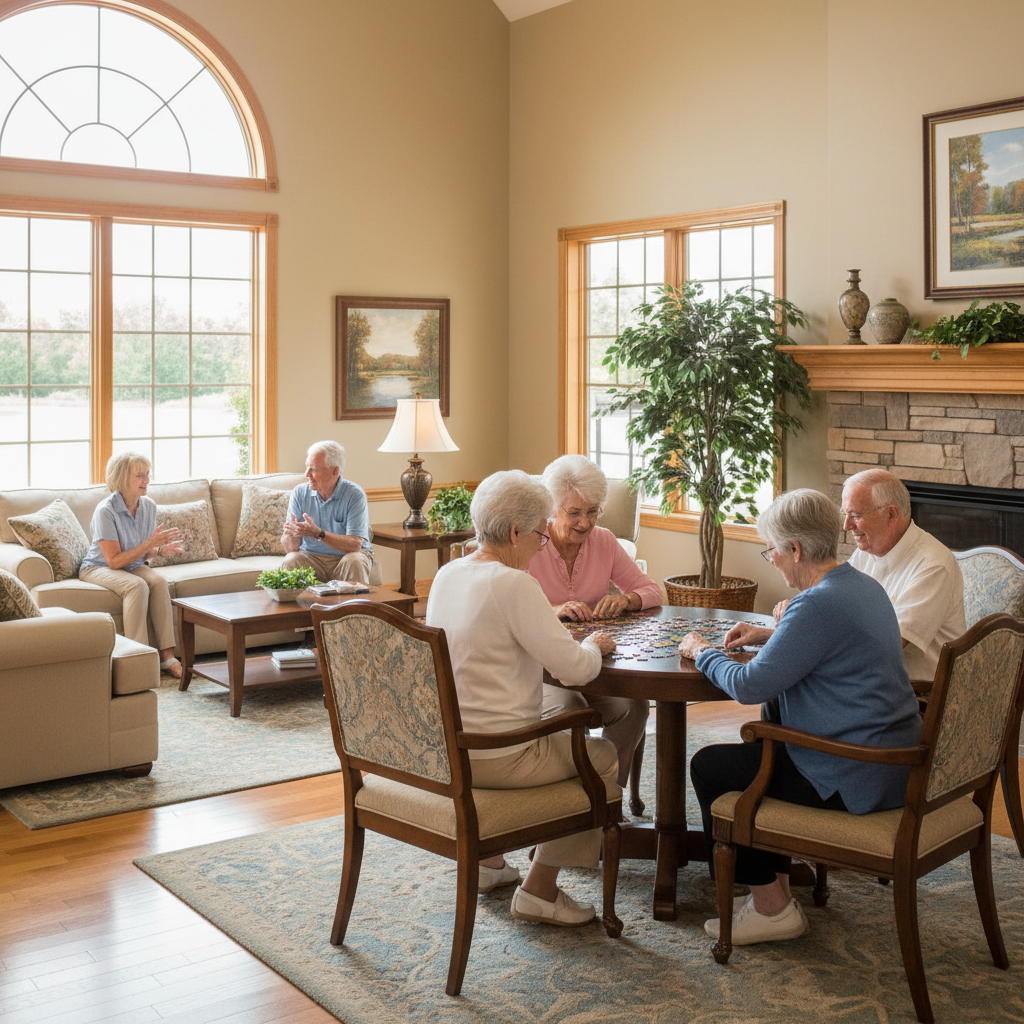
Social integration is the vital final step in helping seniors transition to assisted living. While a beautiful suite provides comfort, a thriving social circle provides a reason to get out of bed every morning. Finding "their people" requires a proactive approach that begins before the move-in date. Request the community’s activity calendar early to identify two specific clubs or recurring events that match your loved one’s existing interests. If they are a lifelong Cleveland sports fan, look for a Browns watch party; if they are a gardener, find the schedule for the community greenhouse.
Facilitating the first few introductions can ease the anxiety of entering a new dining room. Many Cleveland-area facilities utilize resident ambassadors, seasoned residents who act as social guides for newcomers. These ambassadors can accompany your parent to their first few meals or introduce them to neighbors with similar backgrounds.
Introducing your parent to the staff is equally important. Take a moment to share specific biographical details with the Life Enrichment Director. Knowing that your parent was a schoolteacher in Cleveland Heights or an engineer in Solon allows staff to foster connections with residents of similar professional backgrounds. For families seeking a community with a specific social culture, senior living resources can offer guidance. If you need assistance identifying which Northeast Ohio communities excel at peer matching, professional senior care placement services provide the local expertise necessary to find the right fit. You may also contact Jacqueline Shore to discuss your loved one’s specific social needs.
When to Seek Professional Transition Assistance
Navigating the logistical and emotional layers of a move often reaches a point where family members feel stretched beyond their capacity. It is common for adult children and their parents to hit a deadlock, where the parent feels pushed and the child feels overwhelmed by responsibility. At this stage, seeking professional senior care placement services is not just a convenience; it is a vital strategy for preserving family relationships. A Senior Care Placement Advisor serves as a neutral third party who can facilitate difficult conversations, de-escalating the natural tensions that arise when discussing safety and independence.
Jacqueline Shore provides the specific local expertise necessary to cut through the noise of hundreds of options in Northeast Ohio. Helping seniors transition to assisted living requires more than just finding an available room; it requires finding a community culture that matches their personality. Because she understands the micro-cultures of different Cleveland communities, she can identify which facilities cater to specific social needs. For a quiet, introverted senior, she might recommend a boutique residence known for its contemplative garden spaces and small-group activities. Conversely, for a social butterfly who thrives on engagement, she can point toward communities with robust social calendars and lively communal dining.
By utilizing senior living resources and expert guidance, families can move away from guesswork and toward an informed choice. This professional support ensures that the focus remains on the senior’s quality of life rather than the friction of the decision-making process. To explore how personalized guidance can simplify your family’s path through the complexities of the relocation process, you can contact Jacqueline Shore for a consultation.
Navigating the emotional landscape of a move to assisted living is a journey that requires time, patience, and understanding. While these transitions often feel complex, focusing on compassionate communication can help your family find peace and clarity. If you would like expert support as you explore your options, our comprehensive senior placement services are designed to provide the guidance you need. We are here to help simplify the process, ensuring your loved one finds a community where they can truly thrive.